
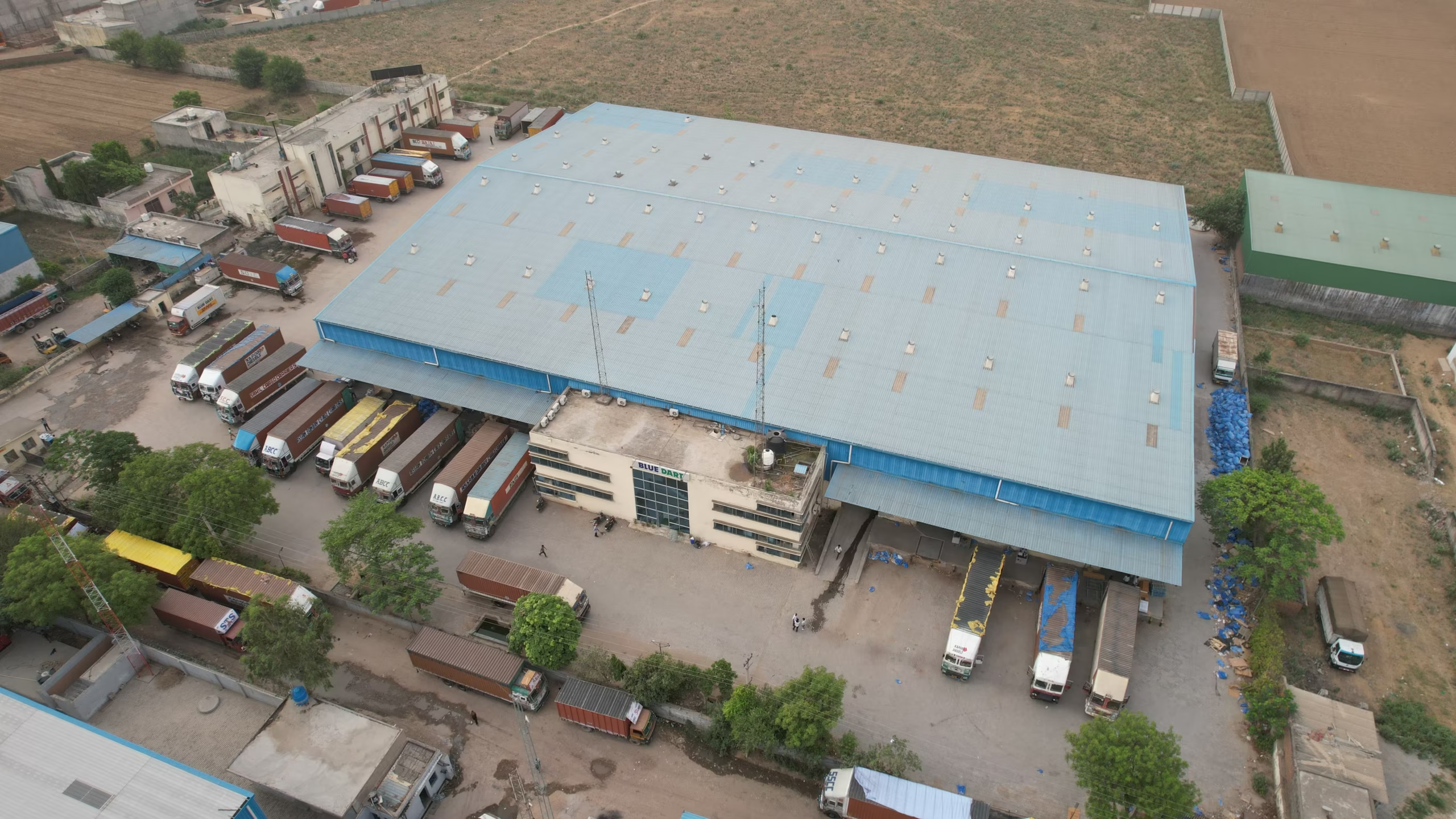
Warehouse Construction Cost in India 2026 | Complete Guide by PISL
Warehousing and logistics in India are no longer supporting industries; they are growth engines. With the expansion of e-commerce, shifts in manufacturing, faster delivery expectations, and government-backed infrastructure programs, the demand for modern warehouses has surged across the country.
Yet, whether you are an investor, a logistics operator, or a business planning expansion, the very first question is always the same: “What will the warehouse construction cost?”
At PISL, we face this inquiry daily. Our company has gained a profound understanding of the market through over 16 years of experience and the delivery of millions of square feet of commercial and industrial projects.
We are aware that cost clarity is more important than just providing rough estimates. A warehouse requires a significant investment, and even minor errors can impact returns over a long period.
This article offers real-world clarity, provides practical cost ranges, and offers a straightforward breakdown of the factors that drive warehouse construction costs in India. With this information, you can plan confidently, rather than relying on assumptions.
What Actually Determines the Cost of Warehouse Construction?
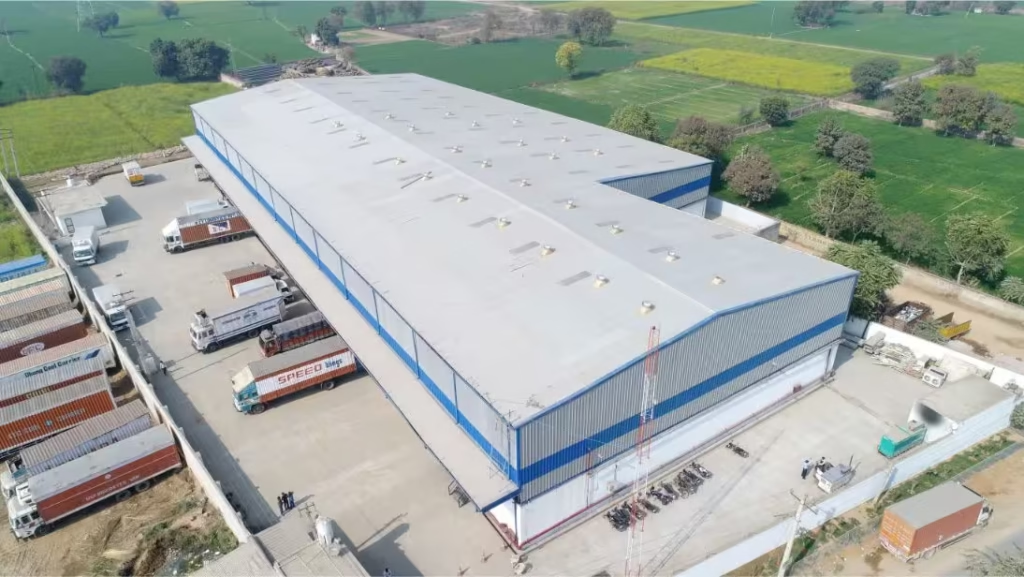
There is no single, flat answer to warehouse construction cost. Think of a warehouse like buying a car; the final price depends on the model, engine, features, and purpose.
Several factors come together to shape the cost:
Structure Type (PEB vs RCC)
A Pre-Engineered Building (PEB) is faster to construct and typically more economical, making it an ideal choice for logistics operations. RCC structures are stronger and more durable, but they require more time and money to create.
Size and scale
Bigger warehouses are more likely to get the benefits of economies of scale. A warehouse of 100,000 square feet typically costs less per square foot than a 25,000-square-foot warehouse, and this is because it utilizes fixed costs more efficiently.
Flooring strength
Warehouses with heavy racking systems or high forklift traffic require FM2/FM3 flooring. Stronger floors increase the cost of the material and execution, but they also prevent long-term damage from occurring.
Roofing, Cladding, and Insulation
Basic GI roofing is the least expensive option; however, insulated panels aid in temperature regulation and energy consumption management—this is particularly important for operations in FMCG, pharmaceutical, or cold-chain environments.
MEP and Fire Safety Systems
Nowadays, electricals, lighting, drainage, fire hydrants, sprinklers, and pumps are all mandatory. High-compliance facilities naturally incur higher costs, but at the same time, they are reducing operational risk.
External Development
Internal roads, truck yards, stormwater drains, boundary walls, parking areas, and landscaping all significantly contribute to the overall budget.
Location and Land Conditions
Soil type, seismic zone, accessibility, and local labour availability directly affect construction methods and cost efficiency.
Warehouse Construction Cost Per Square Foot in India
Let us have a practical discussion instead of just throwing numbers at you.
The costs of warehouse construction in the current market fall into three major categories as follows:
Standard PEB Warehouses
They are the basic buildings having the primary purpose of providing logistic services with only minimal MEP and compliance requirements.
Approx. ₹900 – ₹1,300 per sq ft
RCC or Hybrid Warehouses
These types serve crucial roles when toughness, multi-level usage, or heavy weight is essential.
Approx. ₹1,500 – ₹2,000 per sq ft
Grade-A / High-Spec Warehouses
Major logistics firms utilize these buildings, equipping them with total automation, high-racking systems, and enforcing strict regulations for the storage and handling of goods.
₹1,800 – ₹2,500+ per sq ft
For comparison, a 100,000 sq ft warehouse can cost between ₹ nine crore and ₹20-25 crore, depending on the category.
They are practical ranges and not overly enthusiastic estimates.
Why Costs Differ – PEB vs RCC vs Grade-A (A Simple Comparison)
Choosing a warehouse structure is akin to selecting a home.
PEB Warehouses
PEB is a procedure similar to constructing a high-quality modular home piece by piece; it is faster, more productive, and less expensive. It is perfect for logistics, storage, and distribution where speed and scalability are of utmost importance.
RCC Warehouses
RCC demands time and investment, but it resembles constructing a solid and long-lasting house. This house can serve various purposes and becomes stronger and more durable as a result.
Grade-A Warehouses
These are premium homes. They come with advanced flooring, higher clear heights, automation readiness, superior fire safety, and energy-efficient systems. They cost more upfront but reduce operational expenses and attract top-tier tenants.
The “right” choice depends entirely on your business objective.
Real-Life Application: What PISL Brings to the Table?
At PISL, we approach warehouse projects as vital business infrastructure rather than just construction jobs.
We have successfully constructed large-scale warehouses, logistics centers, and made-to-order (MTO) buildings that enable our clients to strike the right balance between price, regulatory compliance, and expansion potential.
Our strength lies in:
- Integrated design-to-execution approach, reducing rework and wastage
- Transparent cost planning, so there are no surprises mid-project
- Strict quality control, especially in flooring, structure, and safety systems
- On-time delivery, which directly impacts your operational readiness
For example, in one large logistics park project, early design optimization helped reduce structural steel consumption while still meeting load requirements, saving the client high upfront costs without compromising performance.
Market Trends Shaping Warehouse Construction Costs in 2026
Warehouse construction costs do not exist in isolation.
Steel price fluctuations, rising labour wages, fuel costs, and material transportation charges all play a role. In short, everything that affects India’s construction ecosystem ultimately impacts your warehouse costs.
At the same time, demand for Grade-A warehouses is rising rapidly. Tenants now expect better clear heights, stronger floors, automation compatibility, and facilities that comply with regulations.
The rising quality standards and costs are putting pressure on major logistics corridors.
A Practical Checklist to Estimate Your Warehouse Construction Budget
Before the confirmation of your budget, consider this checklist just like a consultant would:
- Unambiguously state the function of the warehouse
- Determine the type of structure at an early stage (PEB, RCC, or hybrid)
- Cover all the costs of the project: MEP, flooring, and fire safety
- Consider external development works
- Study the location of the land and the condition of the soil
- Prepare for future expansion or automation
- Include an additional contingency buffer for fluctuations in the market
This method avoids both the problem of under-budgeting and the subsequent expensive redesigns.
Conclusion on Warehouse Construction Cost
Warehouse construction cost is never about a single number. It is the outcome of structure choice, specifications, location, compliance needs, and long-term business goals.
In the current scenario, the cost of standard facilities ranges from ₹900 to ₹1,800, and for Grade-A warehouses, from ₹1,800 to ₹ 2,500 and above. Creative projects often come with a higher price tag, but proper scheduling from the start makes them successful.
With over 16 years of experience, PISL specialises in delivering cost-efficient, future-ready warehouses that do not compromise on quality or compliance.
If you are planning a warehouse project and need a customised, realistic cost estimate, our team is ready to guide you clearly, transparently, and professionally.
Connect with PISL to build smarter, not costlier.