
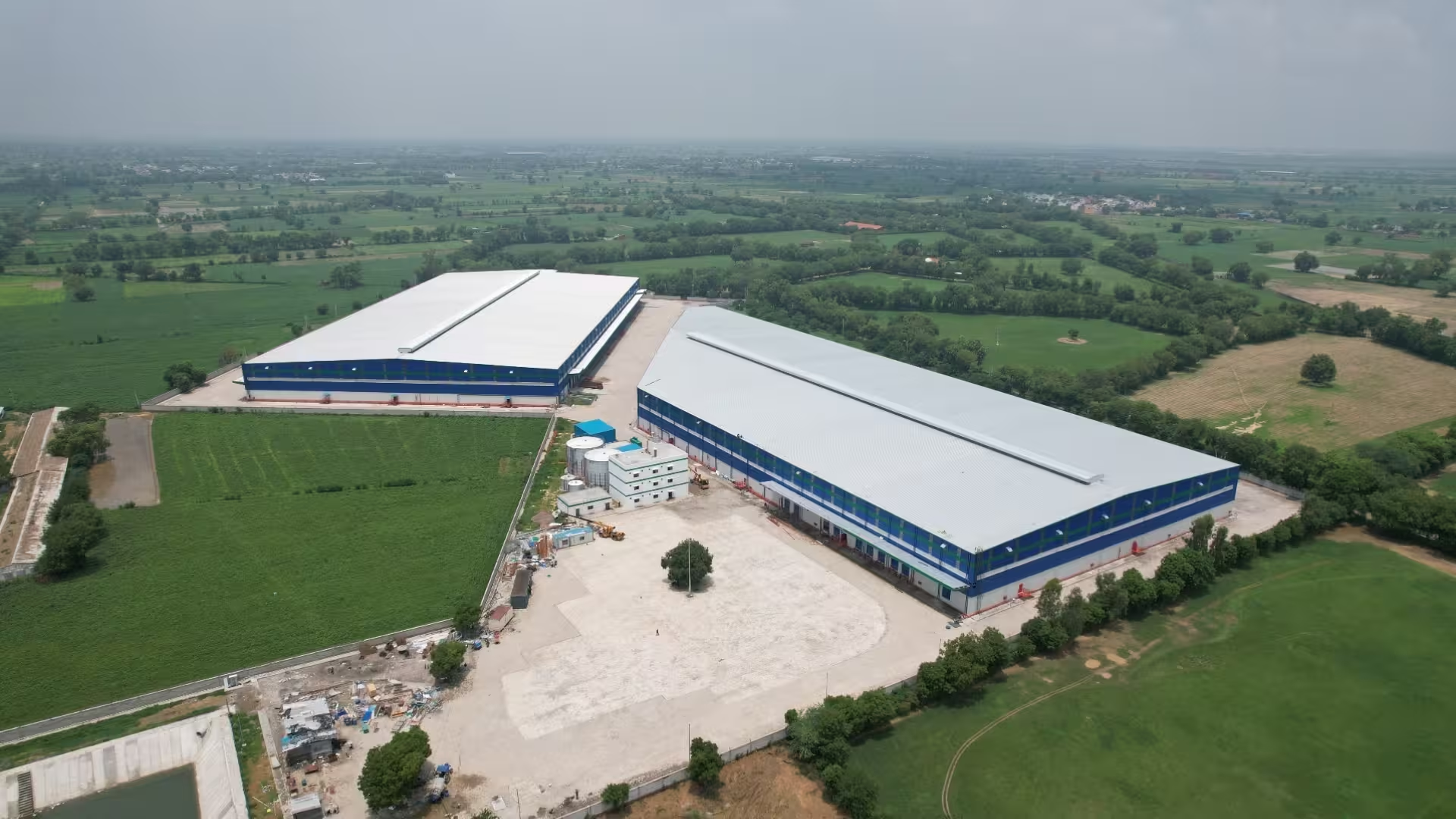
Multimodal Logistics Park in India | The Future of Efficient, Connected Supply Chains
A multimodal logistics park (MMLP) is more than just a vast warehouse zone. It functions as a comprehensive logistics ecosystem, where road, rail, and sometimes even waterways converge, with modern storage facilities, cargo terminals, and value-added services.
Instead of spreading goods across multiple small facilities, an MMLP brings everything into one connected location.
Inside a multimodal logistics park, you find mechanized warehouses, container terminals, bulk cargo areas, cold storage rooms, and advanced loading and unloading infrastructure.
Because everything is centralized and connects to multiple transportation modes, goods move faster, costs remain under control, and supply chains operate smoothly.
That is the honest answer to what a multimodal logistics park is and why it matters so much for India.
Why India Needs MMLPs and How They Change the Logistics Game?
India’s logistics system has struggled for decades. High freight costs, fragmented storage, overreliance on road transport, and weak intermodal connectivity hinder businesses and increase expenses.
A strong network of multimodal logistics parks in India solves these problems at their roots.
Here’s how MMLPs make a difference:
They Reduce Logistics Costs
Bringing intermodal transfers, containerization, shared warehousing, and bulk movement in one location creates a multimodal logistics park that generates significant savings. Logistics costs generally decrease drastically when companies switch freight from road to rail or utilize consolidated storage.
They Make Supply Chains Faster
Goods rush from factories to markets or ports with every service available inside one connected hub. This close integration not only reduces transit time but also helps businesses maintain steady delivery schedules.
They Support Perishables and Pharma
A multimodal logistics park’s cold-chain facilities ensure the safe storage of temperature-sensitive goods, including fruits, vegetables, dairy products, meat, and pharmaceuticals, to prevent spoilage. These special areas help maintain product quality throughout the journey, thereby reducing spoilage.
They Promote Sustainable Logistics
A carefully designed MMLP will prompt companies to switch from many small trucks to either rail or high-capacity vehicles for their freight. This switch will not only result in less road congestion and lower emissions but will also create a cleaner movement system.
They Boost Trade and Competitiveness
The improvement of logistics enhances India’s global competitiveness. Faster, safer, and cheaper goods movement enables businesses to penetrate both domestic and international markets with greater reliability.
This advantage makes manufacturers, exporters, and retailers more confident in their growth.
In simple terms, a multimodal logistics park in India will become the backbone of the country’s modern supply chain network.
Also Read – Logistics Park Companies in India
What Stands in the Way: Challenges in Rolling Out MMLPs
The concept of MMLPs is robust; however, their large-scale construction is a challenging task. The following are some significant obstacles:
Large Land Requirements
Securing over 100 acres of land in a prime location for an MMLP poses a significant challenge. High prices, fragmented ownership, and a shortage of land hinder the development process.
Fragmented Old Warehousing
India is still full of small, unorganised warehouses that are not mechanised. A big challenge is to integrate these old facilities with the modern MMLP ecosystem.
Regulatory Complexity
Developers must obtain permits from various authorities, including rail, road, local, and environmental agencies. These approvals, which partially overlap, increase the time required and complicate the process.
Skill Shortages
A trained workforce, strong operational systems, and disciplined execution equip the modern logistics infrastructure.
Poor last-mile connectivity
An MMLP works well only when the surrounding road and rail networks support it smoothly.
Unless these issues are solved, the full potential of multimodal logistics parks in India will remain unrealized.
How PISL Fits Into India's MMLP Story: Building the Backbone
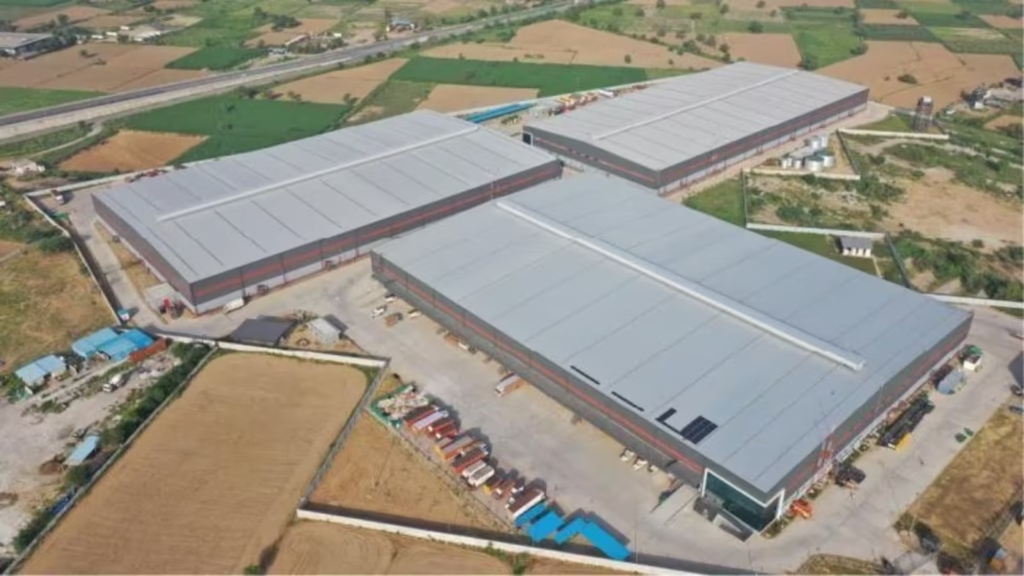
This is where PISL makes a substantial difference. PISL doesn’t run freight operations; it builds the infrastructure that allows efficient logistics to exist.
16+ Years of Industrial Construction Experience
PISL brings over 16 years of experience in industrial construction and understands the needs of modern logistics infrastructure. Their work across India gives them deep insight into how supply chains operate and how high-quality logistics spaces drive business performance.
Built-to-Suit (BTS) Warehousing
PISL emphasizes built-to-suit warehousing as its primary focus and steers clear of conventional buildings. With their partner-like approach to every new warehouse, they can accommodate large MMLP projects where accuracy and speed are critical.
Grade-A Quality and Engineering
PISL provides structures of the highest quality, which emphasise longevity, security, and revolutionary designs. These factors are essential in any multimodal logistics park, where sound engineering and reliability are the primary supports for the upswing in productivity and the facilitation of cargo transportation.
End-to-End Capability
Their integrated approach encompasses design, procurement, and construction, all performed in-house. This single process offers quicker delivery, improved communication, and more stringent quality control for every project.
Strong Operational Presence Across India
PISL has ongoing projects in various parts of the NCR, Punjab, Rajasthan, and other locations. This enables PISL to offer its customers comprehensive and diverse market knowledge from the outset. They can thereby create logistics infrastructure that is fitting for the company’s growth, speed, and long-term scalability.
In short, when India visualizes the future of a multimodal logistics park, companies like PISL create the physical foundation that makes that future possible.
Why MMLPs and PISL Matter for Businesses and India's Growth?
Whether you run a manufacturing unit, an e-commerce brand, an FMCG company, a retail chain, a pharma business, or an agri-export venture, the advantages of a multimodal logistics park are huge.
You benefit through:
- Lower logistics and storage costs
- Faster, more predictable delivery cycles
- Ready access to custom-built warehousing
- Stronger domestic and export supply chains
- Freedom to scale without worrying about land or construction
- Reduced losses in perishables and temperature-sensitive goods
For India as a whole, a multimodal logistics park will reduce logistics costs, strengthen manufacturing clusters, support exports, and elevate the country’s global competitiveness.
The Future of Multimodal Logistics Park in India
The future looks extremely promising. With India investing heavily in rail corridors, expressways, ports, and logistics reforms, the ground is ready for large-scale MMLP development.
These parks combine transportation, warehousing, cold-chain, and value-added services in one integrated format, creating next-level efficiency.
For PISL, this moment brings a huge opportunity:
- Build world-class logistics parks
- Deliver high-quality BTS warehouses
- Support companies that need future-ready infrastructure
- Contribute to India’s logistics transformation
If execution remains strong and policies remain supportive, the future of multimodal logistics parks in India will shape how goods move from 2030 to 2040 and beyond.
Conclusion on Multimodal Logistics Park in India
A multimodal logistics park (MMLP) is not just a modern facility; it is a catalyst for India’s logistics revolution. With multi-transport connectivity, advanced warehouses, cargo terminals, and cold storage, these parks reduce costs, improve speed, and help businesses stay competitive.
For this vision to become a reality, India needs a strong, dependable infrastructure. PISL plays a key role here. With years of expertise, customised warehouses, Grade-A construction, and an expanding presence across India, PISL supports the growth of logistics parks and helps businesses scale confidently.
If you want future-ready logistics infrastructure, an MMLP built on PISL’s foundation can become the best way to unlock efficiency, growth, and long-term success.